In my fourth and final blog post, I will once again be discussing how differences in culture (i.e. independence versus interdependence) directly impact the media within that culture. My partner Kate Carrigan and I decided to analyze culture differences in two popular love songs, one from Spain and another from France. For the Spanish culture, “Si Tú No Estás Aquí” from the album Lunas Rotas by Rosana Arbelo was used. For the French culture, “La Vie en Rose” from the album Chansons Parisiennes by Édith Piaf was used. At the time of their release, and even today, both are popular in each of their respective cultures. Furthermore, they amassed popularity due to individuals resonating with them in some way. If an individual can relate to a song more, they are more likely to listen to it. Cultures develop certain traits, so it follows that a song will become popular in that culture because the song hones in on those characteristics.
Using the following map created by Geert Hofstede’s to depict variation in independence and interdependence, it was determined that France is an independent culture whereas Spain is a mix of both (Figure 1).

Spain, which is encompassed in the orange circle to the left, has a score of 49-55 according to the Hofstede model. This suggests that the culture is a mix of interdependence and independence. To further classify which one it favors, further research was performed. According to Tangney’s article, Spain is an interdependent society since pride is considered a highly undesirable trait.2 In an interdependent culture, pride insinuates social disharmony because it favors personal goals over fulfillment of social duties. Additionally, in the orange circle to the right, it shows that France has a score of 66-67. This, then, is more of an independent society compared to Spain. To them, pride is a highly sought-after trait because it facilitates standing out in a group. From that, media will portray those differences. As such, the “Si Tú No Estás Aquí” from Spain and “La Vie en Rose” from France will display remnants of interdependence with inklings of independence and solely independence, respectively. The former will be analyzed before the latter in the subsequent paragraphs.
To begin, Rosana’s “Si Tú No Estás Aquí” represents a culture of interdependence in the tone, lyrics, and music video of the song. A small indication of independence exists in the title. Taken together, this agrees with Hofstede’s model and the research article. The song details a speaker’s intense love for another individual. She explains that, if he were to leave, everything in the world would become painful and meaningless. The tone itself is very slow, almost as if it is coming from the speaker’s heart and it is hard to admit the true thoughts. There is a sense of pain in her voice, which represents the fear of a world where the other individual is not with her. As such, it portrays that relationships are of deep meaning to her. An interdependent culture, such as Spain, is rooted by relations to others. The fear of losing that part of the individual themself is the root of pain, which is elicited in the tone.
The lyrics work in conjunction with the music video to further emphasize Spain’s interdependent aspect. From the speaker’s perspective, her relationship with her partner particularly holds a deep sentiment to the point where “without [them], people become no one.”3 This idea of aloneness without him is represented in the music video by a singular chair and how the speaker is singing alone in the darkness (Figure 1).

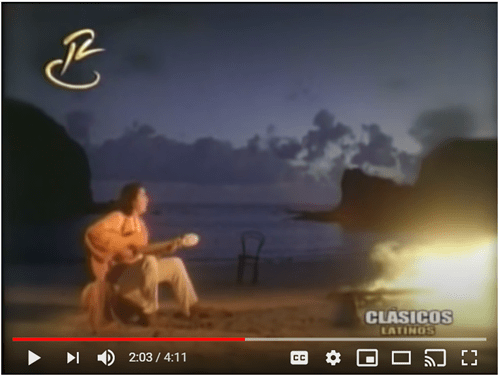
Figure 1. Both 1a and 1b display how there is a sense of loneliness that would arise if the speaker’s love interest were to leave her. Retrieved from https://www.youtube.com/watch?v=XlFOpw8tG7Y.4
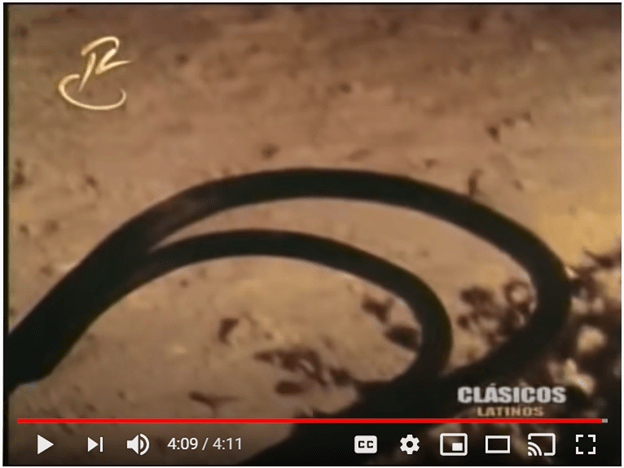
Additionally, the chair falling in the final scene represents her need for him (Figure 2). Without him, her life seems to fall apart because she has nothing to continue living for. In the lyrics, the speaker explains, “I can’t be without you/If you’re not here the air burns me” and “the biggest become the smallest/I’ll stroll down a starless sky this time/Attempting to understand who made hell out of paradise.”3 Together, these further show how interdependent cultures emphasize social unity above all else. Without that crucial element, there is a loss of self to the point where life can seem somewhat meaningless. Only through relationships can an interdependent person find true happiness.
Though Spain is interdependent, it also contains independence. This aspect is most evident in the English translation of the title. “Si Tú No Estás Aquí” translates to “If You Are Not Here.”3 The “you” shows the interdependent aspect by placing emphasis on another individual yet the “here” shows the independent aspect of Spain. It suggests that the other individual must be come to her, thus displaying a common independent characteristic of promoting one’s own goals over group goals. As such, Spain is a culture of primarily interdependence with some independence.
Secondly, Piaf’s “La Vie en Rose” represents a culture of independence in the title’s imagery and, primarily, lyrics of the song. Her song expresses the joy of finding love. Unfortunately, an official music video was never released by the artist, so that could not be used for analysis. Tony Martin, Louis Armstrong, and countless other artists have adapted the song to their own country and created a music video, but because that could have altered the cultural representation of the original song, those videos were not be considered in this blog post. The title translates to “Life in Pink” in English. The significant word is “life.” No individual’s life experience is identical to another’s, thus indicating all lives are unique. Key characteristics of independent cultures are individuality and uniqueness. As such, from the title alone, it can be inferred that Piaf’s song alludes to ideals of uniqueness found within independent cultures, such as France.
The lyrics of “La Vie en Rose” are what truly portray the independent aspect. Piaf sings, “A gaze that make me lower my own.”5 Much like the Spanish song, this suggests that feelings of love are so powerful that they can usher feelings of weakness. Here, the speaker is unable to keep herself guarded, which is why her gaze lowers as a sign of submission to the powerful emotion. In “Si Tú No Estás Aquí,” the speaker explains how losing that feeling of love would result in pain and numbness. However, the French song is distinguishable from the Spain song based on the focal point of love found beyond an initial reading of the lyrics.
Using the translated lyrics, the French song utilizes declensions of “I” (e.g. I, me, and my) a total of thirty-two times throughout. In comparison, the Spanish song only uses any of those cases sixteen times in total. Due to the French song using twice as much of these pronouns, it alludes to an independent culture. The use of those pronouns places emphasis on the individual whereas the Spanish interdependent culture is more about relations to others. The difference can further be characterized through the use of “you” in the lyrics. The French song never once uses that pronoun whereas the Spanish song uses it sixteen times. “You” emphasizes focus on other individuals, which is a priority in interdependent cultures. All in all, because the French song uses many more individual-based pronouns and no relational pronouns, it exemplifies how it is an independent culture—of which focuses on individuality.
In conclusion, Rosana’s “Si Tú No Estás Aquí” displays characteristics of an interdependent culture with remnants of independence. Piaf’s “La Vie en Rose” displays solely independent characteristics. After analyzing the title, lyrics, music videos, and tone of songs, an individual can come to understand the cultural undertones found within that song.
Throughout the entirety of this project, I came to understand variations of independence and interdependence in eight cultures, including the following: America, Mexico, Italy, Poland, Korea, Japan, France, and Spain. Even to countries close in proximity, there are significant differences in the culture. Initially, I did not realize how many subtle differences could be found in various songs regarding the same topic—love in this case. However, those differences now make sense to me considering the many aspects culture entails—customs, arts, achievements, social institutions, race, nationality, etc. Following, due to the many sources for potential variability in a culture, there is bound to be variation in even the seemingly commonplace things like music. In the end, coming to know those differences in a culture can enable those of opposing viewpoints to celebrate their differences rather than create a larger divide. Ideally, in the future, discrepancy in beliefs will not lead to intense discomfort as it does today.
An unknown individual once said, “The beauty of the world lies in the diversity of its people,” which I found was the overarching purpose of these four blog posts. By studying the eight cultures different than my own, I came to appreciate the differences within each. I hope you enjoyed learning about these cultures and their specific emics with me.

https://i.pinimg.com/originals/4f/af/e8/4fafe80ba184cb984b6a3374255ce6c7.gif.
References
1 “The 6 Dimensions Model of National Culture by Geert Hofstede.” Geert Hofstede, geerthofstede.com/culture-geert-hofstede-gert-jan-hofstede/6d-model-of-national-culture/.
2 Tangney, June P. “Selfconscious Emotions, Psychology Of.” International Encyclopedia of the Social & Behavioral Sciences, 2015, pp. 475–480. Elsevier, https://doi.org/10.1016/B978-0-08-097086-8.25032-0.
3 “Rosana – Si Tú No Estás Aquí Lyrics English Translation.” Rosana – Si Tú No Estás Aquí Lyrics English Translation, https://lyricstranslate.com/en/si-tu-no-estas-aqui-if-you-are-not-here.html-0.
4 YbethxD. “Rosana – Si Tu No Estás Aqui.” YouTube. 7 March 2007, https://www.youtube.com/watch?v=XlFOpw8tG7Y.
5 Darby. “La Vie En Rose Lyrics and English Translation – Edith Piaf [Original Version].” French Lyrics Translations, 20 Oct. 2019, www.frenchlyricstranslations.com/la-vie-en-rose-edith-piaf-french-lyrics-and-english-translation/.
6 Edith Piaf Officiel. “Edith Piaf – La vie en rose (Audio official).” YouTube. 30 November 2015, https://www.youtube.com/watch?v=-0KvBnIvTFs.
 Adria's Music Blog
